
Datadog
Unified observability and security platform with AI-powered insights.
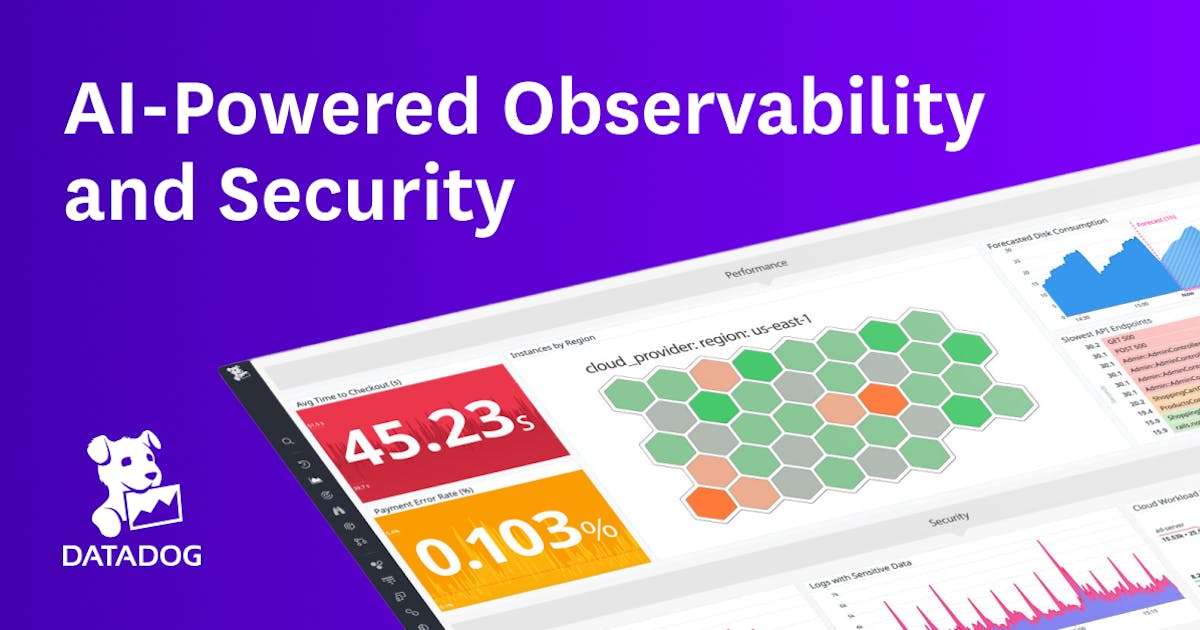
Datadog is a comprehensive cloud monitoring and observability platform that unifies infrastructure monitoring, application performance management, log management, security monitoring, and more into a single integrated platform, with AI-powered features including anomaly detection, intelligent alerting, and the Bits AI assistant for natural language queries across all monitoring data. It is one of the most widely adopted observability platforms for cloud-native organizations.
The breadth of Datadog's capabilities is its defining characteristic. Rather than using separate tools for metrics, traces, logs, and security, Datadog brings them together so teams can correlate data across all these dimensions in a single interface. When an application performance issue arises, engineers can pivot from an APM trace to the underlying infrastructure metrics, related logs, and even security events without switching tools. The platform integrates with over 800 technologies and services, covering major cloud providers (AWS, Azure, GCP), container orchestration (Kubernetes, Docker), databases, message queues, and virtually every common component in a modern technology stack. The Bits AI assistant allows team members to ask questions in natural language and receive answers drawn from across all their monitoring data.
Datadog's AI-powered anomaly detection learns normal patterns for your metrics and automatically surfaces deviations, which reduces the need for manually set static thresholds that generate false alarms. The intelligent alerting system can correlate related alerts and reduce noise during incidents, helping on-call engineers focus on the root cause rather than being overwhelmed by symptom alerts. The platform also provides features for synthetic monitoring, real user monitoring, continuous profiling, and database monitoring, making it possible to observe every layer of an application's performance.
Datadog is best suited for engineering organizations running cloud-native infrastructure, particularly those operating microservices architectures where the complexity of monitoring across many services demands an integrated approach. It works well for teams of all sizes, from startups to large enterprises. The platform offers a free tier with limited features and data retention, with paid plans that scale based on the number of hosts, log volume, and features activated. Cost management is a significant consideration -- Datadog's pricing can escalate quickly as data volume grows, and organizations often need to invest in optimization to control spending. The platform's depth means there is a learning curve to fully leverage its capabilities.
Last updated: July 2026
Key Features
- Infrastructure and application performance monitoring
- AI-powered anomaly detection and alerting
- Log management and analytics
- Distributed tracing across microservices
- Bits AI assistant for natural language queries
- 800+ integrations with cloud services and tools
Pros
- + Most comprehensive observability platform available
- + AI-powered insights reduce mean time to resolution
- + Massive integration ecosystem (800+ integrations)
- + Unified platform eliminates tool sprawl
Cons
- − Pricing can escalate quickly with data volume
- − Steep learning curve for the full platform
- − Cost optimization requires careful planning
User Reviews
★
★
★
★
★
4.0 from 4 reviews
RK
Rina Kim
★
★
★
★
★
solid 4/5. gets the job done for CI/CD. would love to see multi-cloud in a future update
Jul 07, 2026
CZ
Chloe Z.
★
★
★
★
★
good tool, use it daily. pipeline automation works well. only wish better alerts was better but overall solid
Apr 22, 2026
TN
Tyler Novak
★
★
★
★
★
good tool, use it daily. IaC support works well. only wish better alerts was better but overall solid
Apr 13, 2026
SJ
Sofia J.
★
★
★
★
★
pretty good. saves me time on monitoring most days. the deploy automation feature is the main reason I stick around
Nov 26, 2025
Compare Datadog






Looking for something different?
View Datadog Alternatives →