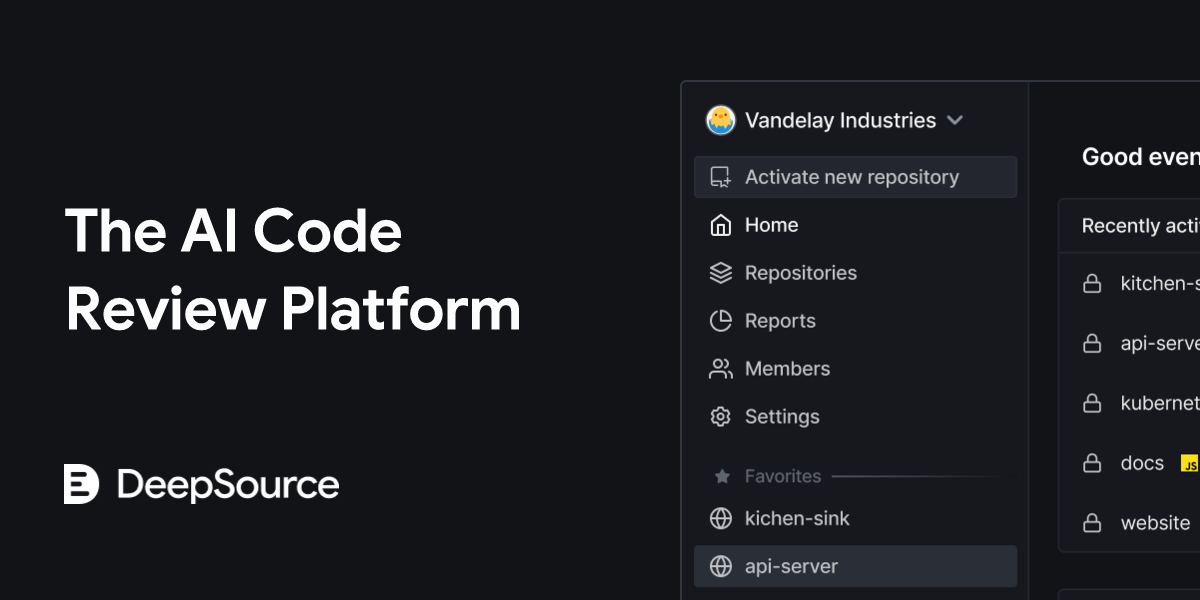

DeepSource is a static analysis platform that automatically detects and fixes code quality issues, security vulnerabilities, anti-patterns, and performance problems across multiple programming languages, with the ability to generate automated pull requests that fix detected issues. It supports Python, Go, JavaScript, TypeScript, Ruby, Java, Rust, and several other languages.
The defining feature of DeepSource is its Autofix capability. Rather than just flagging issues and leaving developers to fix them manually, DeepSource can automatically generate pull requests that resolve detected problems. This transforms static analysis from a reporting tool into an active remediation system, significantly reducing the time teams spend addressing code quality issues. The analysis covers a broad range of categories including bug risks, anti-patterns, security vulnerabilities, style violations, and performance issues. DeepSource also provides code coverage tracking, allowing teams to enforce minimum coverage thresholds as part of their quality gates.
DeepSource integrates with GitHub, GitLab, and Bitbucket, running analysis automatically on every commit and pull request. The dashboard provides a clear view of your codebase's health, tracking issues over time and showing trends in code quality. Teams can configure which analyzers and rules are active, suppress false positives, and set quality gates that must pass before code can be merged. The platform supports custom analysis configurations per repository, so different projects can have different quality standards based on their needs.
DeepSource is best suited for development teams that want to automate code quality enforcement across their repositories without spending significant time on manual code review for common issues. It works well for organizations managing multiple repositories and needing a unified view of code health. The tool is free for open-source projects with unlimited repositories and analysis runs, making it popular in the open-source community. Paid plans are available for private repositories and teams that need features like compliance reporting, SAML SSO, and dedicated support. Some language analyzers are more mature than others -- Python and Go coverage is particularly strong, while newer language support may have fewer rules available.
Last updated: March 2026
Key Features
- Static code analysis across multiple languages
- Automated fix generation with Autofix PRs
- Security vulnerability detection
- Code coverage tracking and enforcement
- GitHub, GitLab, and Bitbucket integration
- Custom analysis rules and configurations
Pros
- + Autofix PRs save significant remediation time
- + Free for open-source projects
- + Broad language support with deep analysis
- + Clean dashboard for tracking code health
Cons
- − Some language analyzers more mature than others
- − Can produce false positives on complex patterns
- − Enterprise features require paid plan
User Reviews
★
★
★
★
★
4.3 from 3 reviews
MC
Mike Chen
★
★
★
★
★
I was mass-comparing tools for a while and this one stuck. the test generation is best-in-class imo
Apr 09, 2026
NF
Nadia F.
★
★
★
★
★
using this for a large codebase (~200k lines) and it handles it surprisingly well. security scanning is clutch
Jan 27, 2026
PA
Petra Andreev
★
★
★
★
★
good not great. the security scanning is excellent but I feel like custom rules should be a priority for them
Dec 20, 2025
Compare DeepSource





Looking for something different?
View DeepSource Alternatives →